
Economic Warning Signal
LVMH: When Luxury Becomes an Economic Warning Signal. What changing spending habits among the wealthy reveal about consumer confidence, global markets and the wider economy.
When economies struggle, we generally expect consumers to reduce their spending. Rising living costs, economic uncertainty and concerns about employment all influence household budgets. But what happens when wealthy consumers begin reducing their spending?
Unlike households struggling to meet everyday expenses, wealthy individuals may have sufficient financial resources to maintain their lifestyles regardless of economic conditions. Yet wealth does not necessarily translate into spending.
Wealth doesn’t always disappear during economic downturns. Sometimes it simply becomes less visible.
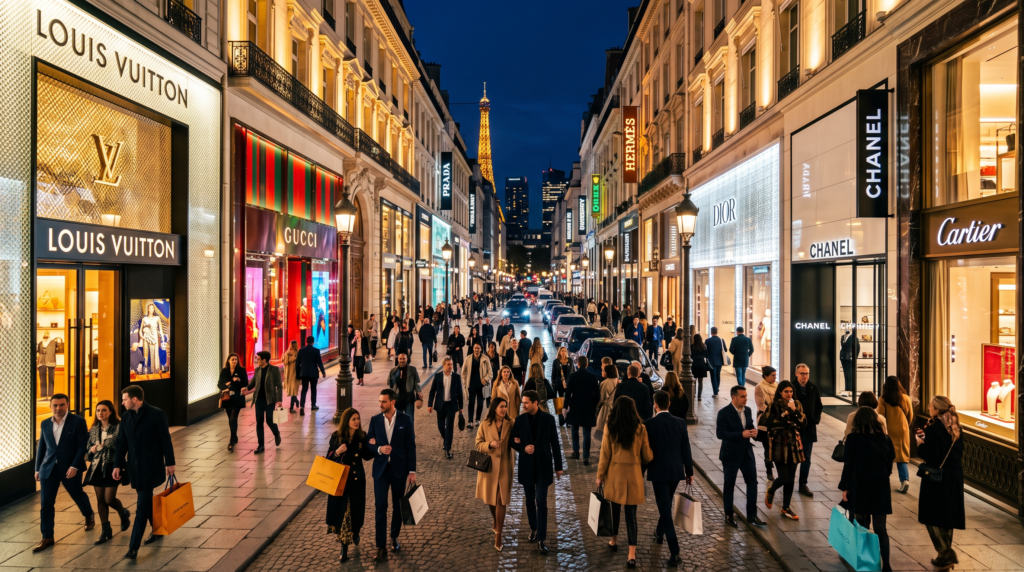
This distinction is particularly interesting as investors await the latest trading figures from luxury goods group LVMH, the owner of brands including Louis Vuitton, Christian Dior, Tiffany & Co. and Moët & Chandon.
After a prolonged downturn in luxury sector valuations, investors are looking for evidence that demand is recovering. However, the bigger question may not be whether wealthy consumers can afford luxury goods. It may be whether they want to purchase them, and whether they want to be seen doing so.
Key Points
- Luxury spending reflects confidence, not just wealth. Wealthy consumers may reduce spending during economic uncertainty even when they can comfortably afford luxury products.
- Social restraint influences spending decisions. During difficult economic periods, affluent consumers may prefer to avoid conspicuous displays of wealth.
- LVMH provides insights into global consumer behaviour. Its performance reflects changing demand across major markets, including China, the United States and Europe.
- Changing priorities don’t necessarily mean declining wealth. Consumers may redirect spending towards investments, experiences or more understated luxury products.
- Luxury spending may lag economic recovery. Financial markets and personal wealth can recover before consumers feel confident enough to resume discretionary spending.
- Newton’s Law of Connectivity reveals the wider ripple effect. Changes in luxury spending influence businesses, suppliers, employment, company earnings and financial markets.
- Investors need to look beyond headline sales figures. Understanding whether a slowdown reflects financial pressure, social restraint or structural changes is essential when evaluating investment opportunities.
The central takeaway: Wealth doesn’t always disappear during economic downturns. Sometimes it simply becomes less visible.
Table of Contents

Observation: LVMH and the Luxury Market Slowdown
LVMH is widely regarded as a bellwether for the global luxury industry. Its international operations provide insights into consumer spending across major economies, including China, the United States, Europe and Japan.
The company reported revenue of €38.6 billion during the first half of 2026, with organic revenue growth accelerating to 3% in the second quarter. Profit from recurring operations reached €8.7 billion, while operating free cash flow amounted to €4.1 billion.
These figures demonstrated that LVMH remained a substantial and profitable business despite challenging market conditions. However, the company’s share price has experienced significant weakness, reflecting concerns about future growth and the wider luxury market.
Investors are now watching the third-quarter figures for signs that the improvement recorded earlier in the year can continue.
There are several developments worth observing.
China: Wealth, taxation and confidence
China has been one of the most important markets for international luxury brands. However, economic uncertainty, changing consumer preferences and greater scrutiny of wealth are influencing purchasing behaviour.
Recent Chinese tax enforcement measures affecting offshore trusts have introduced another potential source of uncertainty for wealthy individuals.
The direct financial impact may be manageable for some affluent consumers, but the wider implications for confidence could be more significant.
When people become uncertain about future taxation, regulation or economic conditions, they may reconsider how they allocate their wealth.
United States: Spending slows despite wealth
The United States provides another interesting signal. According to credit-card spending data reported by Reuters, US luxury spending declined for a third consecutive month in September 2026, falling approximately 6% compared with the previous year.
This slowdown has occurred despite continued wealth creation among some affluent households, particularly those benefiting from financial markets and technology investments. It highlights an important distinction.
Having wealth and feeling confident enough to spend it are not necessarily the same thing.
Europe and the wider luxury market
Europe remains an important centre for luxury production, design and retail. Changes in international tourism, exchange rates and consumer spending can influence European luxury companies even when their domestic economies are relatively stable.
Consequently, weakness in luxury demand can spread well beyond the country where the original change in consumer behaviour occurs.
Interpretation: Why the Wealthy May Choose Restraint
Luxury spending is often associated with financial success, exclusivity and status. However, there is another aspect of wealth that receives less attention. The wealthy do not always want to appear wealthy.
During periods of economic difficulty, conspicuous consumption can become socially uncomfortable.
When businesses are struggling, households are reducing expenditure and unemployment concerns are increasing, displaying expensive purchases may attract unwanted attention.
A wealthy individual may still have the financial resources to purchase a luxury car, designer handbag or expensive watch. But that does not necessarily mean they will choose to do so.
There are several possible explanations.
Financial Restraint
Wealthy individuals are not immune to economic uncertainty. Their financial circumstances may be closely connected to businesses, investments, property markets and other assets.
Even when they retain substantial wealth, concerns about future asset values, taxation or economic growth may encourage them to preserve capital.
Reducing discretionary spending can therefore be a deliberate financial decision rather than a necessity.
Social Restraint
Another consideration is how displays of wealth are perceived. During prosperous economic periods, visible luxury consumption may be celebrated as a symbol of achievement. During difficult periods, the same behaviour may be viewed differently.
Some wealthy consumers may prefer to avoid drawing attention to their financial position. This is not necessarily a loss of purchasing power. It may simply reflect a change in what people consider appropriate.
Changing Priorities
Wealthy consumers may also redirect their expenditure. Instead of purchasing highly visible luxury products, they may favour understated clothing, private experiences, travel, jewellery or other purchases that provide personal satisfaction without attracting attention.
The growing interest in understated luxury illustrates how preferences can shift away from prominent logos and conspicuous branding. However, changing preferences do not automatically mean spending has disappeared. Some expenditure may simply move into different categories.
For luxury companies, this distinction matters.
A consumer who can no longer afford a product represents a different challenge from one who can afford it but no longer finds it desirable.
Is Luxury Spending an Economic Warning Signal?
Luxury spending is sometimes treated as an indicator of economic confidence. When wealthy consumers are spending freely, it can suggest optimism about financial markets, business prospects and future wealth.
When spending slows, investors may interpret the change as a warning of broader economic weakness.
But the relationship is not straightforward. Luxury spending can be influenced by several factors simultaneously, including:
- Consumer confidence and expectations about future wealth.
- Financial market performance and asset valuations.
- Taxation, regulation and geopolitical uncertainty.
- Social attitudes towards visible wealth.
- Changing consumer preferences and brand desirability.
This means a decline in luxury spending does not automatically indicate that wealthy consumers are becoming poorer. It may indicate that they are becoming more cautious.
There is also an interesting question about timing. Could visible luxury spending sometimes lag behind an economic recovery?
Financial markets may begin recovering before consumer confidence returns. Wealthy individuals may see their investment portfolios improve but continue exercising restraint until they feel more comfortable about the wider economic environment. Social attitudes may take even longer to change. If this happens, luxury spending could recover after other economic indicators have already improved.
It is an important possibility to consider rather than assuming luxury sales always lead changes in economic activity.
Newton’s Law of Connectivity: The Ripple Effect
One of the fundamental principles of business and wealth strategy is that nothing happens in isolation. Changes in luxury spending provide a useful example of this connectivity. Consider what happens when affluent consumers become more cautious.
First, consumer behaviour changes – Purchases may be postponed, reduced or redirected towards different products and experiences.
Second, luxury companies respond – Lower demand can affect revenue expectations, inventory management, marketing expenditure and investment decisions.
Third, suppliers and related industries feel the impact – Luxury goods depend on extensive networks of manufacturers, craftspeople, logistics providers, property owners, retailers and service businesses. A slowdown in demand can influence activity throughout these supply chains.
Fourth, financial markets reassess valuations – Investors adjust their expectations for future earnings, growth and profitability. Share prices may fall even when companies remain profitable, particularly if their valuations previously reflected expectations of stronger growth.
Finally, the effects can feed back into consumer confidence – Changes in share prices and investment portfolios can influence how wealthy consumers perceive their financial security.
That creates the possibility of a feedback loop.
Lower confidence contributes to reduced spending. Reduced spending affects company earnings. Weaker earnings influence valuations, potentially reinforcing concerns about wealth and future economic conditions.
Not every change follows this sequence, but it illustrates why consumer spending, business performance and financial markets cannot be considered independently.
A purchasing decision made in Beijing or New York can ultimately influence a manufacturer in Europe and an investor holding shares thousands of miles away.
That is Newton’s Law of Connectivity in action.
What Does This Mean for Investors?
For investors, the challenge is distinguishing between a temporary slowdown and a more fundamental change in demand.
A declining share price does not automatically make a company an attractive investment. Equally, weaker consumer spending does not necessarily mean a successful business has lost its long-term potential. The important consideration is what lies behind the numbers.
- If demand is weakening because consumers are experiencing genuine financial difficulties, recovery may depend on improvements in economic conditions and purchasing power.
- If demand is weakening because wealthy consumers are exercising caution, recovery may be more closely connected to confidence and expectations.
- If consumer preferences are changing permanently, companies may need to adapt their products, pricing and marketing strategies.
These different explanations can produce similar short-term sales figures but have very different long-term implications.
This is why investors need to look beyond a single earnings announcement. Revenue trends, profit margins, regional performance, consumer behaviour and management expectations all contribute to a more complete picture.
LVMH’s latest results may provide valuable evidence, but they are only one part of the wider economic story.
Action: Look Beyond the Headline
As LVMH prepares to release its latest trading figures, investors will naturally focus on revenue growth and whether the luxury market is showing signs of recovery.
However, there are broader questions worth considering.
Are wealthy consumers genuinely experiencing financial pressure, or are they choosing to preserve their wealth?
Are they reducing spending altogether, or simply redirecting it towards different products and experiences?
Are luxury companies experiencing a temporary downturn in confidence, or are consumer preferences changing more fundamentally?
And perhaps most importantly, are financial markets already pricing in a recovery that has yet to appear in company results?
These questions apply well beyond the luxury sector.
Consumer behaviour is influenced by financial circumstances, confidence, expectations and social attitudes.
Understanding how those factors interact can provide useful insights into business performance and investment risk.
Economic Warning Signal
The luxury market provides more than an indication of demand for expensive products. It offers a window into the relationship between wealth, confidence and consumer behaviour.
When wealthy consumers reduce spending, it is tempting to assume that their financial circumstances have deteriorated.
But sometimes the explanation is more complex. They may still have the money. They may simply prefer to keep it, invest it elsewhere or avoid displaying it.
Wealth doesn’t always disappear during economic downturns. Sometimes it simply becomes less visible.
For investors, recognising that distinction can be just as important as understanding the latest sales figures. Because the real economic signal may not be how much wealth exists, but how confident people feel about using it.
And as Newton’s Law of Connectivity reminds us, those individual decisions can create ripple effects across businesses, economies and financial markets.
Observe the change. Interpret the connections. Act with a strategy.
Further Reading

Podcast and Video Library
Learn more about Behind the Headlines – The Ripple Effect and how it can impact investments with the Strategic Investor Brief
Frequently Asked Questions
Why is LVMH considered an indicator of the luxury market?
LVMH owns major international luxury brands and operates across multiple geographic markets and product categories. Its financial performance provides useful insights into global luxury demand, although it does not represent every segment of the industry.
Does declining luxury spending mean wealthy consumers are losing money?
Not necessarily. Luxury spending may decline because of financial pressure, reduced confidence, changing preferences or a deliberate decision to preserve wealth.
Can luxury spending indicate an economic recovery?
Luxury spending can provide information about consumer confidence, but it is not a consistently reliable leading indicator. In some circumstances, spending may recover only after financial markets or other economic indicators have improved.
What should investors look for in LVMH’s results?
Investors can examine organic revenue growth, regional demand, performance across business divisions, operating margins and management commentary to assess whether improvements are sustainable.
For Behind The Headlines observation, interpretation and action subscribe to The Strategic Investor Brief – The Ripple Effect
Sources and Further Reading for Economic Warning Signal
- LVMH — First Half 2026 Results
- LVMH — Third Quarter 2026 Revenue Announcement
- Reuters — China’s Tax Crackdown Piles Pressure on Luxury Brands
- Reuters — US Luxury Spending Slows
- J.P. Morgan — What’s Next for the Luxury Market?
This commentary is for educational and informational purposes only and does not constitute personalised investment advice.
Karen Newton Ecosystem


Glossary
A definition of words and phrases used in this post – Economic Warning Signal – is available in the glossary

Karen Newton is a Business and Wealth Strategist, 3x #1 International Bestselling Author, Speaker and founder of Karen Newton International. She is known for helping entrepreneurs and investors connect business growth, investment opportunities, and economic trends into practical strategies for building long-term wealth and financial resilience.