The Scarcity Paradox
The Scarcity Paradox: What Hermes can learn from Ferrari.
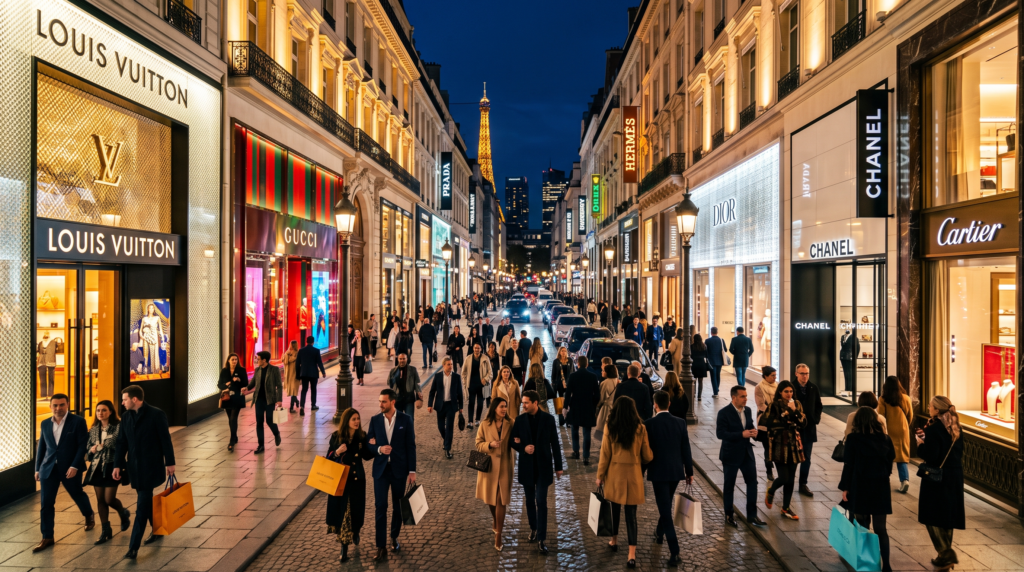
This morning, a story about Hermès caught my attention. UBS has downgraded Hermès from Neutral to Sell, cutting its 12-month price target from €1,695 to €1,168. But it wasn’t the downgrade itself that interested me. It was the reason behind it.
UBS believes that as Hermès has grown, some of the scarcity that helped create the desirability of the brand may be weakening. The bank estimates that non-quota bags now represent around 65% of Hermès leather-goods sales and argues that greater availability could make demand more cyclical.
In simple terms, the question is: Can you make an exclusive product more accessible without eventually making it less exclusive? And that immediately reminded me of Ferrari.
Key Takeaways
- Scarcity can be part of the value proposition. For brands such as Hermès and Ferrari, controlled availability helps create desirability and support pricing power.
- Growth doesn’t automatically destroy exclusivity. Ferrari demonstrates that a company can increase overall production while protecting scarcity through limited models, controlled access, personalisation and customer experience.
- Hermès now faces a similar strategic challenge. Greater availability could dilute its scarcity premium — or, if carefully managed, broaden the ecosystem while preserving exclusivity at the top.
- Nothing happens in isolation. Production decisions affect availability, perception, pricing power, profitability and ultimately investor valuation.
- The lesson extends beyond luxury brands: before scaling a business, understand what customers really value — and make sure growth doesn’t accidentally destroy it.
Table of Contents
When Scarcity Is Part of the Product
Ferrari has understood the power of scarcity for decades. Enzo Ferrari’s philosophy is still quoted by the company today – “Ferrari will always deliver one car less than the market demand.”
It is a deceptively simple business strategy. Most businesses are taught that growth means selling more. If you can sell 5,000 products, find a way to sell 6,000. If you can sell 6,000, aim for 10,000. Build more factories. Increase capacity. Reach more customers.
But what happens when part of the reason people want your product is because not everybody can have one?
Ferrari faced exactly that dilemma. I remember the discussions when Ferrari was producing around 5,000 cars a year and the debate about increasing production.
By 2013, Ferrari was producing around 7,000 cars and deliberately decided to restrict production to preserve exclusivity. Then-chairman Luca di Montezemolo explained that the objective was not to flood the market and that Ferrari belonged to an “exclusivity culture.”
Yet Ferrari didn’t remain a 5,000- or 7,000-car manufacturer forever. In 2025, it shipped 13,640 cars. That is almost double its 2014 production of 7,255 cars. So surely Ferrari became less exclusive? Not necessarily. And that’s where the story becomes interesting.
Growing Without Becoming Ordinary
Ferrari didn’t simply produce more cars and hope the brand survived. It developed layers of exclusivity.
There are different models, limited editions, waiting lists, personalisation programmes, special events and preferential access to some of its most desirable cars for loyal customers.
Ferrari itself says it actively manages waiting lists because they contribute to the perceived exclusivity of the brand. Its most loyal and active customers can receive preferential access to its newest, most exclusive and highest-value cars.
In other words, Ferrari discovered that scarcity doesn’t necessarily mean producing very little. Scarcity can also mean controlling access. And the financial results are interesting.
Ferrari shipped slightly fewer cars in 2025 than in 2024 — 13,640 compared with 13,752 — yet revenue increased 7% to more than €7.1 billion.
Ferrari specifically attributed that performance partly to product mix and personalisation. That’s an important distinction. Growth doesn’t always have to mean selling more units. Sometimes growth comes from increasing the value attached to each unit.
Hundreds of Ferraris at Silverstone
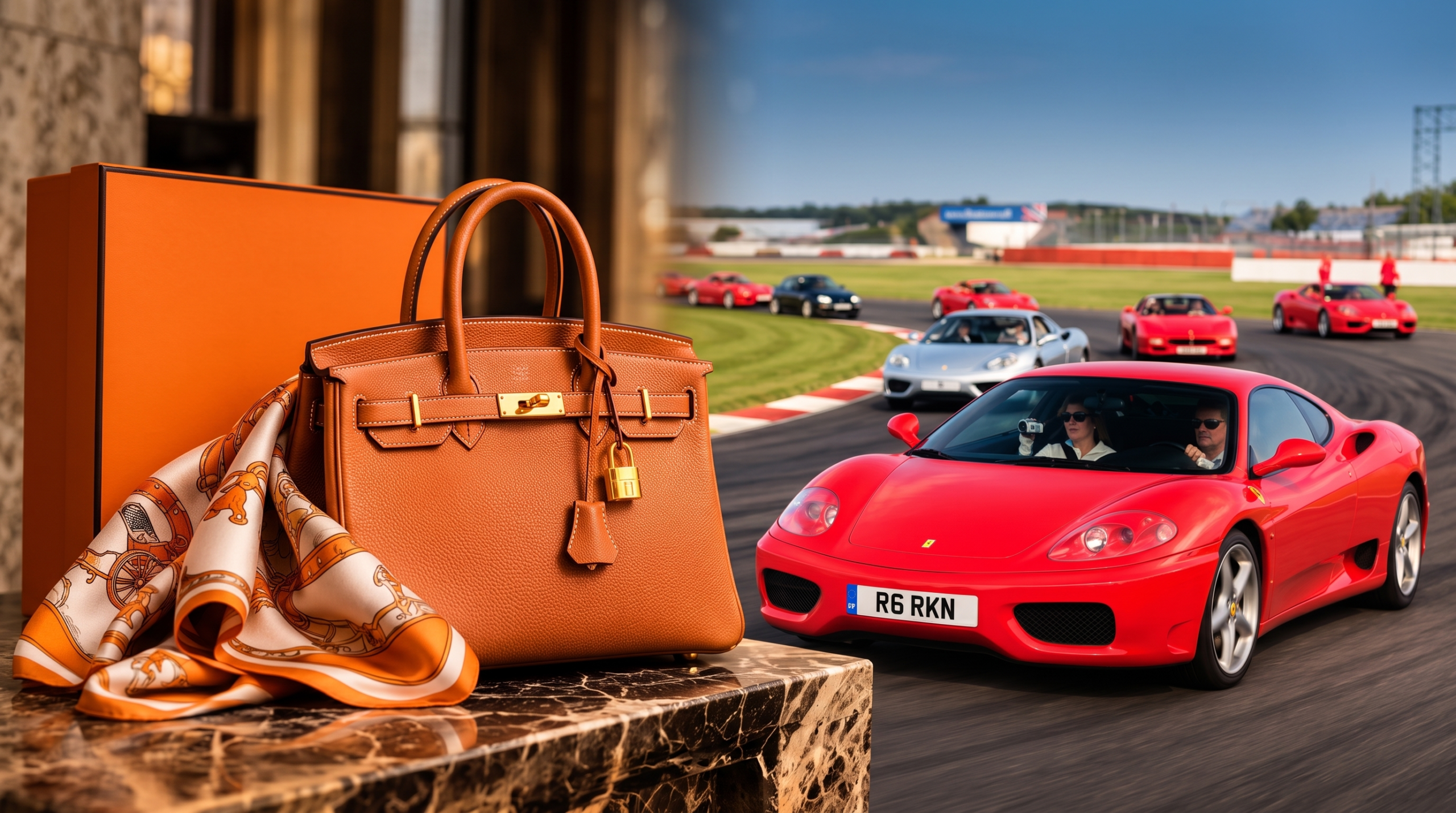
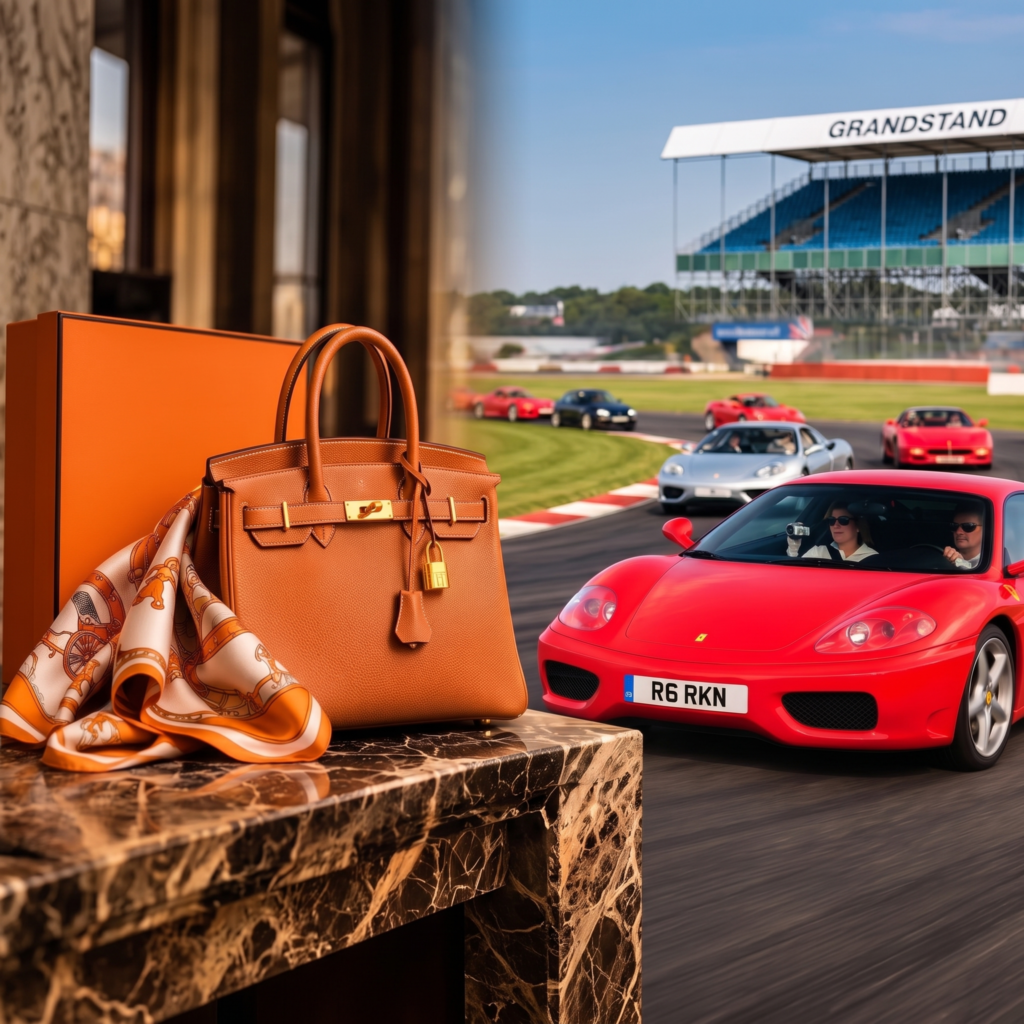
I have a slightly unusual personal perspective on this. I was fortunate enough to participate in the Ferrari gathering at Silverstone that achieved a Guinness World Record for the largest parade of Ferrari cars.
Imagine hundreds of Ferraris together in one place. Logically, you might think seeing that many Ferraris would make them feel less special. It didn’t. If anything, it reinforced the brand.
There was still individuality between the cars. Different models. Different specifications. Different histories. Different owners.
The scale of the gathering didn’t make Ferrari feel ordinary. It demonstrated the strength of the ecosystem surrounding the product. And I think that’s an important distinction when we look at what is happening with Hermès today.
Is Hermès Diluting Scarcity – Or Scaling It?
UBS clearly believes there is a risk. The bank argues that Hermès’ increasing scale and the growing importance of non-quota bags are weakening scarcity and potentially making demand more sensitive to the economic cycle.
It expects organic sales growth of around 5% in 2027 and has reduced its longer-term growth assumptions. But there is another interpretation.
Hermès management has already been questioned about this. During its second-quarter results discussion, UBS analyst Zuzanna Pusz raised the issue of increasing volumes of non-quota bags and whether greater availability could eventually affect exclusivity.
Hermès CEO Axel Dumas acknowledged the tension but defended the company’s approach, emphasising quality and the difficulty of assuming that growth automatically destroys exclusivity.
And this is where Ferrari becomes relevant. Perhaps the question isn’t whether Hermès should sell more or fewer bags. Perhaps the question is whether Hermès can scale the ecosystem while protecting scarcity at the top of it.
A customer might be able to purchase an Hermès bag without having access to a Birkin or Kelly. Just as owning a Ferrari doesn’t automatically give you access to every Ferrari the company produces.
Accessibility and exclusivity can coexist but only if the business manages the boundary between them extremely carefully.
Newton’s Law of Connectivity
This is a perfect example of my Newton’s Law of Connectivity: Nothing happens in isolation.
At first glance, increasing production looks like an operational decision. But follow the connections.
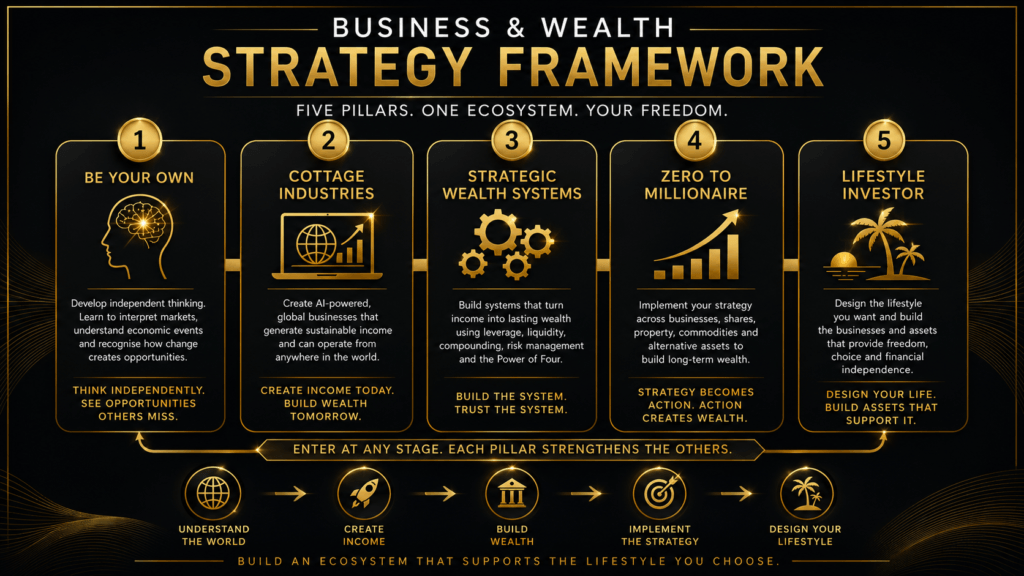
Production → Availability → Scarcity → Customer Perception → Desirability → Pricing Power → Profitability → Investor Expectations → Valuation
Change one part of the system and eventually the ripple can appear somewhere completely different.
A decision made on a factory floor can ultimately affect the valuation investors are prepared to place on the company. That’s why I don’t look at the Hermès downgrade simply as an investment story. It’s a business strategy story. And it’s a brand story. And ultimately all three are connected.
Observation → Interpretation → Action
Observation
UBS has downgraded Hermès because it believes increasing scale and reduced scarcity could result in slower growth and more cyclical demand.
At the same time, Hermès continues to protect extreme scarcity around some of its most desirable products.
Interpretation
The danger isn’t growth itself. The danger is failing to understand what created the value before you started growing.
Ferrari has increased production substantially over the decades while continuing to deliberately manage waiting lists, customer relationships, limited editions and access.
It hasn’t eliminated scarcity. It has learned to manage different levels of scarcity. Hermès may now be facing a similar test.
If greater accessibility introduces more customers to the Hermès ecosystem while products such as the Birkin and Kelly remain genuinely difficult to obtain, expansion could strengthen the wider business.
But if customers begin to perceive Hermès as simply another widely available luxury brand, the economics could change.
That distinction matters.
From Interpretation to Action
Understanding the connection is one thing. Deciding what to do with that information as an investor is another.
That’s where I take the next step in the Strategic Investor Brief – The Ripple Effect.
Each week, I move beyond the headline to look at the potential ripple effects, what they could mean for investors, and the actions worth considering as the story develops.
We’ve made the Observation. We’ve interpreted the pattern. Now it’s time to consider the Action. Continue the analysis in the Strategic Investor Brief.
The Scarcity Paradox
We live in a business environment obsessed with scale.
- More customers.
- More followers.
- More products.
- More production.
- More revenue.
But more isn’t automatically better.
Ferrari demonstrates that a company can grow substantially while deliberately protecting scarcity.
Hermès now provides us with a live case study of whether another extraordinary luxury brand can achieve the same balance.
And that is why today’s downgrade is worth watching. Not because an analyst changed a recommendation from Neutral to Sell. But because underneath that recommendation sits a much bigger strategic question: How do you grow without becoming ordinary?
For business owners, that is worth thinking about. For investors, it is worth watching. Because sometimes the greatest risk to a successful business isn’t that customers stop wanting what it sells. It’s that the company becomes so successful at giving customers what they want that it accidentally removes part of the reason they wanted it in the first place.
Further Reading

Podcast and Video Library
Frequently Asked Questions
Why was Hermès downgraded by UBS?
UBS downgraded Hermès from Neutral to Sell amid concerns that increasing scale and greater availability of non-quota bags could weaken the scarcity that supports the brand’s desirability and pricing power. The downgrade reflects concerns about future growth and valuation rather than suggesting that Hermès has suddenly become a weak business.
How does Ferrari maintain exclusivity while producing more cars?
Ferrari has increased production substantially over time while continuing to manage exclusivity through waiting lists, limited-production models, personalisation and preferential access for established customers. This demonstrates that scarcity doesn’t necessarily require keeping overall production permanently low; businesses can create different levels of access within a larger ecosystem.
What can businesses learn from Hermès and Ferrari?
Growth should not come at the expense of whatever originally made a product or business valuable. Before increasing production, expanding distribution or introducing more accessible products, businesses need to understand what customers are really paying for. The objective isn’t simply to grow — it’s to grow without destroying the competitive advantage that created demand in the first place.
Karen Newton Ecosystem


Karen Newton is a Business and Wealth Strategist, 3x #1 International Bestselling Author, Speaker and founder of Karen Newton International. She is known for helping entrepreneurs and investors connect business growth, investment opportunities, and economic trends into practical strategies for building long-term wealth and financial resilience.