Build The System
Build the system before you need the system. There is a common assumption in business and wealth building that systems are something you introduce later. First, you start the business. Then you make some money. Then you grow. And when everything becomes too complicated to manage, you introduce systems to bring it all under control.
I believe that is the wrong way around.
You build the system before you need the system. The system isn’t something that comes after growth. It is what makes sustainable growth possible.
The same principle applies whether you are building a business, creating an investment portfolio or working towards long-term financial independence.
Key Points For Build The System
- Build the system before you need it. Systems aren’t something to introduce after growth; they create the foundation that makes sustainable growth possible.
- A system doesn’t have to mean technology. Start with a repeatable process, prove that it works and then decide what should be automated, delegated or scaled.
- Build Before You Borrow. Before adding more money, people or technology, make sure you’re using your existing resources effectively.
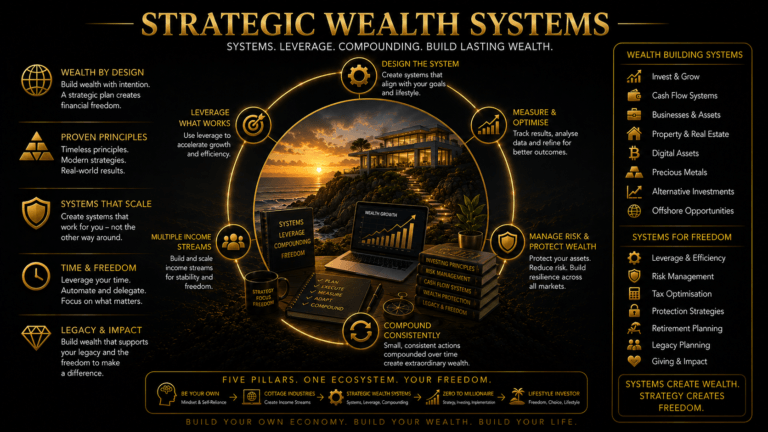
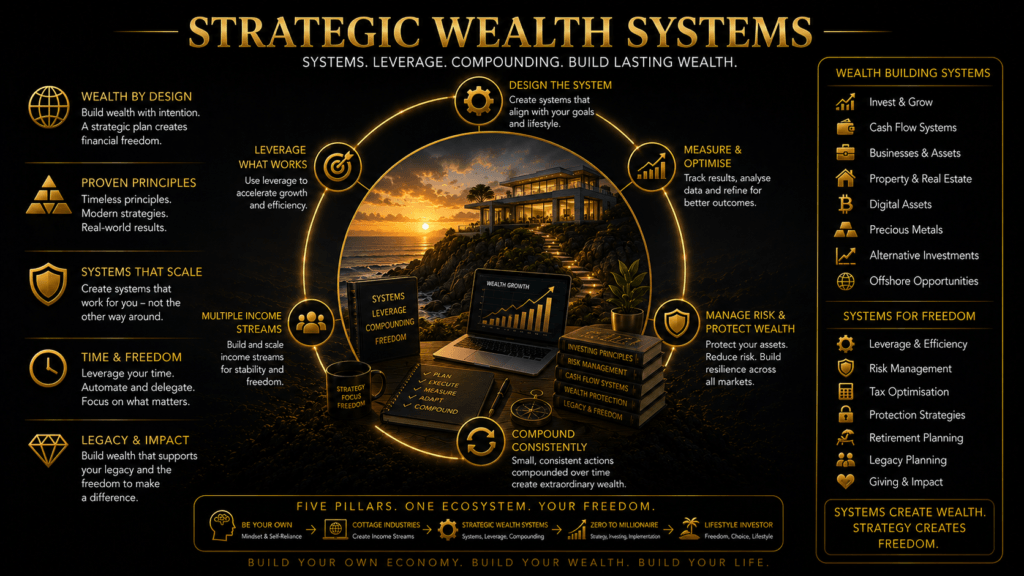
- Wealth is a system, not an event. Long-term wealth is usually created through small, consistent actions that allow reinvestment and compounding to work over time.
- Good systems reduce unnecessary decisions. A framework provides a default course of action while still allowing you to adapt when circumstances or opportunities change.
- Systems should create flexibility, not rigidity. Knowing your objectives, resources and boundaries can make it easier to recognise and act on the right opportunities.
- Build for the business and lifestyle you actually want. Growth doesn’t have to mean a bigger organisation. Your systems should support your chosen outcome.
- Connect your business and wealth systems. Business can create surplus income, which funds assets, generates returns and ultimately creates greater financial choice.
Build the System. Trust the System.
Table of Contents

What Do I Mean by Build the System?
When people hear the word “system”, they often think about technology. Automation. Software. Artificial intelligence. Spreadsheets. Apps. Those can all form part of a system, but they aren’t the system itself. A system is simply a repeatable way of turning an action into an outcome.
In business, that might look something like: Create – Publish – Distribute – Attract – Convert – Reinvest
In wealth building, it might be: Earn – Allocate – Invest – Generate Returns – Reinvest – Compound
Neither requires sophisticated technology. In fact, some of the best systems begin manually. You perform the task. You observe what happens. You identify what works and what doesn’t. You refine the process.
Only then do you decide which parts should be automated, delegated or scaled.
Technology should support the system. It shouldn’t be the system.
Growth Has a Habit of Exposing Weaknesses
When a business is small, inefficiency can be surprisingly easy to hide. You remember to send the email. You know where the document is. You personally follow up with the customer. You update the spreadsheet. You post on social media. You check whether the payment arrived. It works because you are the system.
Then the business grows.
There are more customers, more products, more transactions and more demands on your time. Suddenly the little inefficiencies that were barely noticeable become bottlenecks. This is why waiting until you are busy before building systems can be so costly.
You are trying to design the solution at exactly the point when you have the least time available to do it.
Build Before You Borrow
There is another principle I use: Build Before You Borrow. Before adding more money, more people, more software or more resources, look at what you already have.
- Can it be organised better?
- Can the process be simplified?
- Is something being duplicated?
- Is there a bottleneck preventing existing resources from producing a better result?
Throwing more resources at an inefficient system usually creates a larger inefficient system. That applies just as much to wealth as it does to business.
Earning more money doesn’t automatically create wealth.
If every increase in income produces an equivalent increase in spending, higher income simply creates a more expensive lifestyle.
The missing component is the system that determines what happens to the money once it arrives.
Wealth Is a System, Not an Event
We often hear stories about the investment that made somebody wealthy. The property bought at exactly the right time. The share that increased dramatically. The cryptocurrency that produced an extraordinary return. The business that was sold for millions.
Those stories are interesting because they concentrate years of activity into one dramatic event. But sustainable wealth is rarely created by one decision. It is normally the result of hundreds or thousands of much smaller decisions repeated over a long period.
- You earn.
- You retain some of what you earn.
- You invest.
- Your investments produce returns.
- You reinvest some or all of those returns.
- You repeat.
Compounding then begins doing something that individual effort cannot.
The system starts working alongside you.
Systems Reduce the Number of Decisions You Need to Make
One of the underestimated advantages of having a system is that you don’t have to make every decision from scratch. Imagine an investor who decides what to do every time money becomes available.
- Should I invest it?
- Should I spend it?
- Which investment should I buy?
- Should I wait?
- Is the market going up?
- Is the market going down?
Every transaction becomes another decision. Compare that with somebody who has already established a framework.
They know how much money is allocated to investing. They know the type of assets they are building. They know their risk parameters. They know when they will review the strategy.
They can still adapt when circumstances change, but they aren’t continually reinventing their strategy.
The system provides the default. Strategy determines when you should deviate from it.
A System Doesn’t Mean Rigidity
This is an important distinction. Systems are sometimes associated with rigid processes where everything must happen in exactly the same way. That isn’t what I’m advocating.
A good system should actually make you more flexible. If you know your objectives, your resources, your processes and your boundaries, you can recognise opportunities more quickly.
You don’t have to start analysing everything from zero. You already have a framework against which the opportunity can be tested.
- Does it fit the strategy?
- Do I have the resources?
- What would I need to change?
- What is the potential downside?
- What happens if it doesn’t work?
Preparation can make a quick decision look impulsive to somebody watching from the outside. But there is a big difference between an impulsive decision and a fast decision made within an established framework.
Build for the Business You Want
This is where systems and business strategy become closely connected. Not everybody wants to build a huge company. Growth doesn’t automatically have to mean more employees, larger premises and increasing overheads.
You might want a business that remains relatively small while increasing revenue. You might want a business that can operate from anywhere. You might want several small income streams rather than one large one. You might want technology to take over repetitive work while you retain the parts you enjoy. You might want a business that provides surplus income which can then be transferred into investments.
There is no universally correct model. But there is always one underlying aspect – What are you building the system to achieve?
Once you know that, you can build accordingly.
The Business and Wealth Systems Should Connect
Business and Wealth are often treated as separate subjects. I don’t see them that way.
A business can generate income. But what happens to that income determines whether it contributes to long-term wealth.
Similarly, investments can generate income and capital growth, but those returns need their own system if they are going to compound effectively.
Ultimately, the two systems can become connected: Business creates surplus – surplus funds assets – assets generate returns – returns are reinvested – wealth compounds – wealth creates greater choice.
That is when business stops being simply a way of earning money. It becomes part of a wider wealth-building ecosystem.
Start Small, But Start Early
You don’t need sophisticated systems when you’re starting out. You need repeatable ones. Start by asking:
- What am I trying to achieve?
- Which activities consistently move me towards that outcome?
- What happens repeatedly?
- Where am I wasting time or money?
- Which decisions am I continually making again and again?
- What could be standardised?
- What should remain under my personal control?
- What could eventually be automated or delegated?
- How does the money generated today contribute towards tomorrow’s wealth?
Document what works. Improve it. Test it again. And when the volume eventually increases, you won’t suddenly find yourself trying to create order from chaos. You’ll already have the foundations.
Build the System. Trust the System.
There will always be new opportunities. New technology. New investment trends. New platforms. New business models. Some will be worth exploring. Others will disappear almost as quickly as they appeared.
A strong system doesn’t prevent you from taking advantage of change. It gives you the framework for deciding which changes deserve your attention.
That’s why I believe in build the system before you need it.
Don’t wait until the business becomes overwhelming. Don’t wait until you earn more money before deciding how you will build wealth. Don’t wait for success and then try to work out how to manage it.
Build the system first. Then improve it as you grow. Because ultimately, sustainable business and sustainable wealth aren’t built from one extraordinary decision.
They’re built from ordinary decisions, repeated within a system designed to move you towards the outcome you chose.
Further Reading


Podcast and Video Library
Frequently Asked Questions
What is a strategic wealth system?
A strategic wealth system is a repeatable framework for managing how money is earned, allocated, invested and reinvested over time. Rather than relying on individual investment decisions or opportunities, it creates a process designed to support long-term wealth building and compounding.
Why are systems important when building wealth?
Systems create consistency. Instead of deciding what to do every time money becomes available, you establish guidelines for saving, investing, reinvesting and managing risk. This reduces unnecessary decision-making and helps keep your actions aligned with your longer-term objectives.
Should I build the system before my business starts growing?
Ideally, yes. The systems don’t need to be complicated. Starting with simple, repeatable processes makes it easier to identify what works and improve it before activity increases. As the business grows, successful processes can then be automated, delegated or scaled.
Does having a system mean I can’t change my strategy?
No. A good system should provide flexibility rather than create rigidity. Your system establishes the normal way you operate, while your strategy helps you decide when circumstances justify doing something differently.
How do business systems help create personal wealth?
A profitable business can generate surplus income, but income alone doesn’t automatically create wealth. A system can determine how some of that surplus is allocated towards investments and other assets. Those assets can then generate returns which may be reinvested, allowing compounding to contribute to longer-term wealth creation.
What is the best way to start building a business and wealth system?
Start with the outcome you want to achieve. Then identify the actions you repeat, how money flows through your business and personal finances, where bottlenecks occur and which decisions you repeatedly make. Create simple processes first, test them and improve them before introducing additional technology, automation or resources.
Discover More About Build The Sytem
Strategic Wealth Systems form part of Zero to Millionaire Membership where you can learn strategies, systems and the mechanics for investing. How to build the system and grow your investments.
Karen Newton Ecosystem

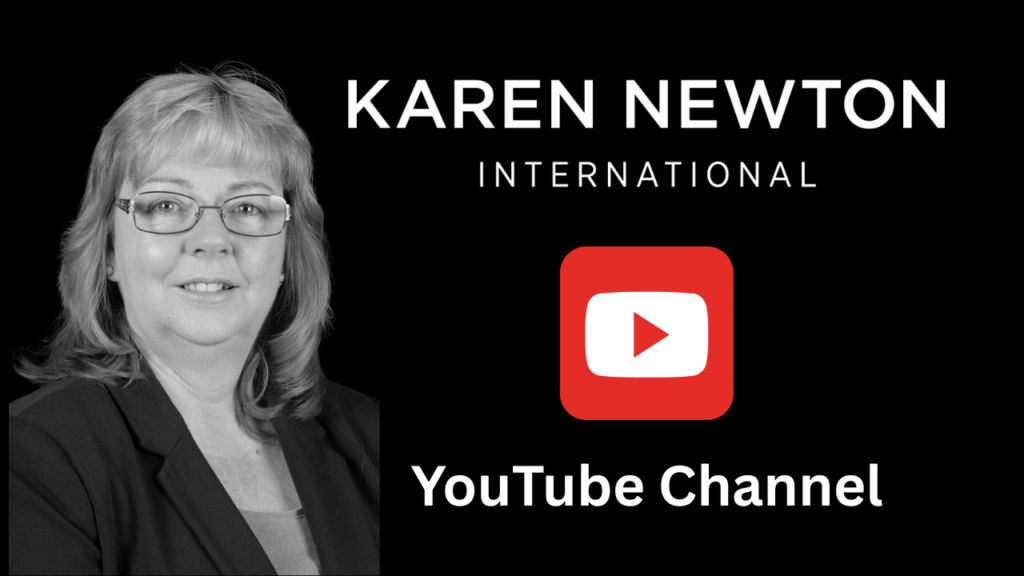

Karen Newton is a Business and Wealth Strategist, 3x #1 International Bestselling Author, Speaker and founder of Karen Newton International. She is known for helping entrepreneurs and investors connect business growth, investment opportunities, and economic trends into practical strategies for building long-term wealth and financial resilience.