Global Partnerships
Global Partnerships: The Invisible Infrastructure Behind Modern Trade
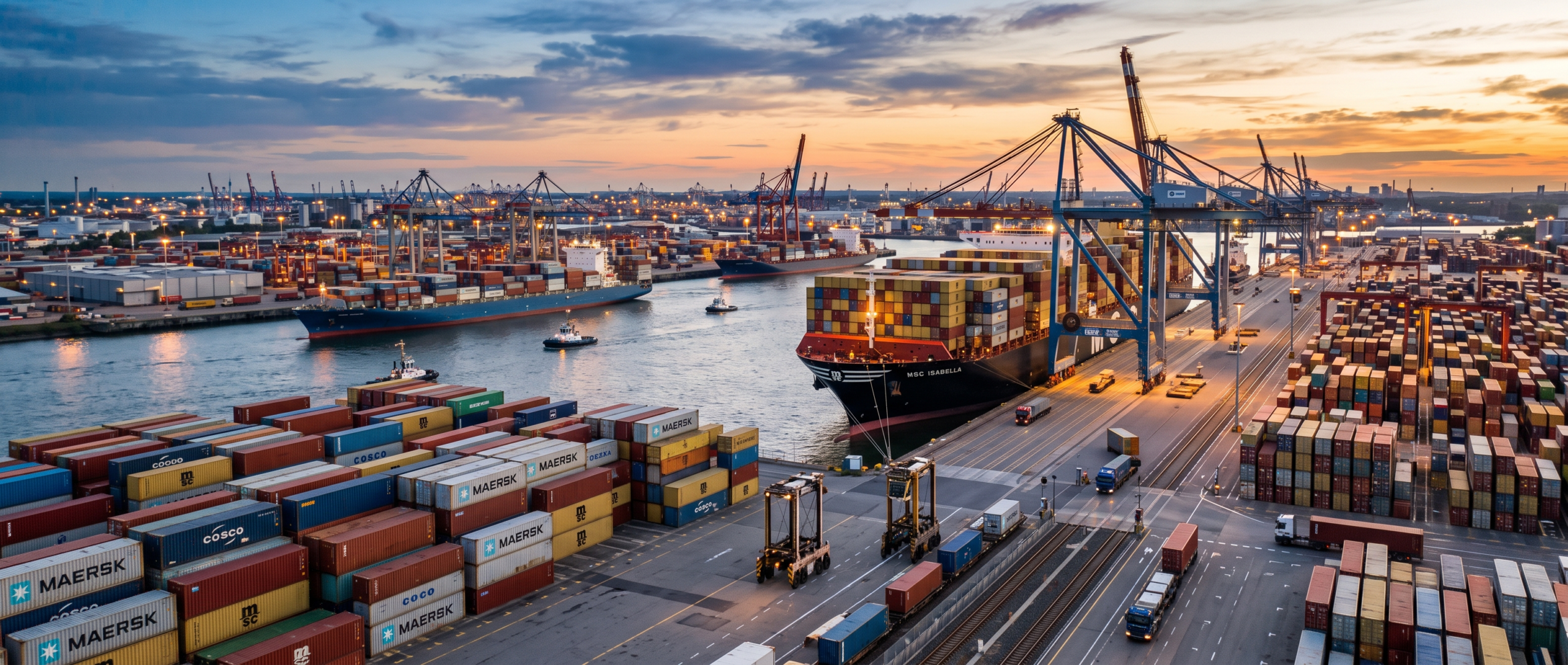
Global Partnerships are not something that comes to mind when we think about international trade. We often picture ships carrying containers across oceans, factories exporting products or companies opening offices in another country. But much of modern global trade is built on partnerships.
Companies collaborate with suppliers, distributors, technology providers, financial institutions, logistics businesses and sometimes even competitors. One company doesn’t necessarily need to own the entire process. Instead, it creates relationships that give it access to markets, technology, expertise, infrastructure and customers.
That can create enormous value. But what happens when one of those relationships ends?
Key Takeaways
- Global trade is increasingly built on partnerships. Businesses use strategic relationships to access technology, expertise, manufacturing, distribution and new markets without having to build everything themselves.
- Partnerships create leverage. Each organisation contributes different strengths, allowing both sides to potentially grow faster and more efficiently than they could independently.
- The automotive industry demonstrates how interconnected trade has become. Vehicles can combine technology, components, investment, intellectual property and manufacturing from several different countries.
- Chinese and European automotive partnerships are blurring traditional trade boundaries. A vehicle using Chinese technology but manufactured in a European factory illustrates why simply labelling products by country of origin no longer tells the whole story.
- Partnerships also create dependencies. Reliance on a particular supplier, technology provider, market or strategic partner can become a vulnerability when circumstances change.
- The Crypto.com and Trump Media relationship provides another example. Partnerships can make strategic sense when they are created but later change or end as markets, priorities and opportunities evolve.
- The impact extends beyond the companies involved. Suppliers, customers, employees, investors and sometimes entire economies can experience the ripple effects of a partnership being created, expanded or terminated.
- Investors should look beyond financial statements. Understanding who a company relies upon — and what would happen if an important relationship changed — can reveal opportunities and risks that headline numbers don’t show.
- The same principle applies to businesses of every size. Partnerships can provide access to capabilities beyond the resources of an individual business, but strong businesses also understand their dependencies and alternatives.
- The announcement is rarely the whole story. Whether a new partnership is formed or an existing one ends, the important question is what happens next?
Table of Contents

The Global Partnership Economy
The scale of global business relationships is easy to underestimate. A product labelled as coming from one country may contain raw materials from another, components manufactured somewhere else, technology developed in another market and financial or digital services supplied from yet another jurisdiction.
The OECD estimates that global value chains account for around 70% of international trade when the movement of services, raw materials, parts and components across borders is taken into consideration.
Far from disappearing, these networks are evolving. Recent OECD research suggests global value chains remain highly globalised, although businesses are changing where they source products, services and expertise.
This means partnerships are becoming part of the infrastructure of global trade.
Why Partner Instead of Building Everything Yourself?
Imagine a company wants to enter a new international market. It could build offices, recruit employees, develop local technology, create distribution networks, obtain licences and spend years developing customer recognition.
Or it could partner with organisations that already have some of those things.
A good strategic global partnership can provide:
- access to new markets;
- specialist technology;
- existing customers;
- distribution networks;
- regulatory knowledge;
- manufacturing capacity;
- finance and investment;
- local expertise.
Both parties bring something to the relationship. The result can be faster expansion without either organisation having to recreate everything from scratch.
Crypto.com and Trump Media: When Priorities Change
A recent example comes from the digital asset sector. Trump Media and Crypto.com had announced a series of ambitious collaborations involving digital assets, financial products and prediction markets.
Those plans have now been terminated, with changing market conditions and shifting business and stakeholder priorities cited as reasons.
The individual companies are interesting. But the bigger business lesson is more important. A global partnership only continues while it creates sufficient value for both sides.
Companies change direction. Markets change. Technology changes. Regulation changes. Management priorities change. A global partnership that made strategic sense twelve months ago may no longer make sense today.
Ending the relationship does not necessarily mean the original decision was wrong. It can simply mean the circumstances have changed.
The Ripple Effect of a Global Partnership
This is where the story becomes much bigger than the two organisations involved. Imagine:
- Company A provides technology to Company B.
- Company B uses that technology to offer services to its customers.
- Those customers build their own businesses around those services.
Investors value both companies partly on expectations about the growth the partnership will produce. Suppliers increase capacity because they anticipate additional demand. Then the partnership ends.
The impact doesn’t stop with Companies A and B. It ripples through customers, suppliers, investors and potentially entire markets.
That is why understanding global partnerships matters to investors as well as business owners.
Global Partnerships Can Also Reshape Countries
The same principle operates at a much larger scale. International partnerships help transfer capital, technology, skills and knowledge between economies.
The WTO has highlighted the close relationship between foreign direct investment and international trade, including the role investment can play in technology transfer, knowledge spillovers and the development of export capabilities.
A company entering another country doesn’t simply bring money. It can bring processes, expertise, technology and access to international markets. Local companies can become suppliers. Employees develop new skills. Infrastructure improves. New businesses emerge around the original investment.
One commercial relationship can therefore create a much wider economic ripple.
The Automotive Industry: Global Partnerships in Action
Few industries demonstrate the importance of global partnerships better than automotive manufacturing.
We might describe a vehicle as German, British, American, Japanese or Chinese, but the reality is far more complicated.
A modern vehicle can contain components, raw materials, software and technology sourced from businesses across multiple countries. Batteries, semiconductors, braking systems, electronics, tyres, specialist metals and software may all come from different suppliers.
Increasingly, the relationships go even further.
Traditional automotive manufacturers are partnering with technology companies, battery manufacturers and emerging electric vehicle businesses rather than trying to develop every new capability themselves.
China provides an interesting example.
Chinese automotive companies have developed considerable expertise in electric vehicles and battery technology, while established European manufacturers have decades of experience in vehicle manufacturing, established brands, dealer networks and access to European consumers.
That creates opportunities for collaboration.
Volkswagen, for example, invested in Chinese electric vehicle manufacturer XPeng, with the companies subsequently expanding their collaboration around electric vehicle technology and vehicle architecture.
Stellantis took a substantial stake in Chinese electric vehicle manufacturer Leapmotor and formed Leapmotor International, giving the Chinese manufacturer access to Stellantis’ international distribution and manufacturing capabilities.
These aren’t simply financial investments. Each side brings something the other wants. Technology meets distribution. Innovation meets established infrastructure. Market access meets manufacturing expertise.
The relationship potentially allows both businesses to move faster than either could independently.
Global Partnerships Change Trade Flows
This also changes the way we need to think about international trade. If a Chinese-designed electric vehicle is manufactured in Europe through a partnership with a European automotive group, is it a Chinese import?
If European manufacturers use Chinese-developed technology inside vehicles produced in European factories, where is the economic value actually being created?
The answer is increasingly, in several places at once.
- Capital crosses one border.
- Technology crosses another.
- Components cross another.
- Intellectual property, software and specialist knowledge move digitally.
- The finished vehicle may then be manufactured close to the customer.
Global trade is no longer simply about Country A manufacturing something and selling it to Country B. It is about interconnected businesses creating value across multiple economies.
There Is Another Side to the Story
Those relationships also create strategic questions. What happens when
- a manufacturer becomes dependent on another company for battery technology, semiconductors, software or critical components?
- when governments introduce tariffs or restrictions?
- when political relationships between countries deteriorate?
- if one partner decides the relationship no longer suits its long-term strategy?
The automotive industry experienced the consequences of supply-chain dependency during the global semiconductor shortages. Manufacturers had factories, employees and customers ready to buy vehicles but couldn’t necessarily produce them because relatively inexpensive components weren’t available.
A tiny component could interrupt an enormously valuable production line. That is the paradox of global partnerships.
They can make businesses stronger by giving them access to resources they don’t possess while simultaneously creating dependencies that make them vulnerable.
For the investor, that means understanding a company’s partnerships can sometimes be just as important as understanding its products. And for the business owner, the lesson operates at any scale.
The question isn’t whether partnerships are good or bad. It is whether you understand where the value is being created, where the dependencies lie and what happens when the relationship changes.
But There Is a Risk
The more interconnected businesses and countries become, the more exposed they are when those connections are disrupted. We’ve seen this repeatedly through pandemics, wars, sanctions, tariffs and shortages. Efficiency and resilience are not always the same thing.
A business might obtain the lowest possible cost by relying heavily on one supplier, one country or one technology partner. But what happens when that relationship disappears?
The cheapest supply chain can suddenly become the most expensive if production stops altogether.
The same applies to investors. When analysing a company, it isn’t enough to look only at revenue, profit and share price.
We also need to understand what those numbers depend upon.
The Investor Lesson
When looking at a business there are several components to take into consideration
- Who does this company depend upon? Look at its major suppliers, customers, technology providers, distribution partners and strategic alliances.
- What happens if one of those relationships changes? Sometimes losing a partner creates a serious problem. Sometimes another partner can easily replace them.
- And occasionally ending a partnership frees a company to pursue something more profitable.
The announcement itself therefore isn’t the investment signal. The ripple effect is.
The Business Lesson
There is also a lesson here for businesses of every size.
- Partnerships create leverage.
- You don’t have to own every resource, employ every specialist or build every piece of infrastructure yourself.
- The right relationship can provide access to capabilities far beyond the size of your own organisation.
- But dependency should never be confused with security.
A strong business understands which partnerships are essential, where alternatives exist and what it would do if an important relationship disappeared.
That’s as relevant to a small online business as it is to a multinational corporation.
The Bigger Picture
Globalisation isn’t simply about products travelling from one country to another. It is increasingly about networks of relationships creating value together.
Those relationships help move capital, knowledge, technology, services and products around the world. They create opportunities that individual businesses could struggle to achieve alone. But they also create interconnected risks.
The end of one corporate partnership might look like a small piece of business news. Look further out, however, and you may see suppliers, customers, investors, industries and even countries affected.
That’s why I don’t simply look at what happened. I look at what happens next. Because in business, markets and investing, the real story is often found in the ripple effect.
Further Reading – Follow The Ripple Effect



Podcast and Video Library
Frequently Asked Questions
What is a global business partnership?
A global business partnership is a relationship between organisations operating across different countries or markets. Partnerships can provide access to technology, manufacturing, distribution networks, expertise, capital or customers without each company having to develop those capabilities independently.
Why are global partnerships important for international trade?
Global partnerships allow businesses to combine resources and expertise across borders. Modern products can involve technology, components, finance, intellectual property and manufacturing from several countries, making partnerships an important part of today’s interconnected global trade.
What are the risks of strategic business partnerships?
Partnerships can create dependency on suppliers, technology providers, distribution networks or other businesses. Changes in regulation, geopolitics, market conditions or corporate strategy can disrupt those relationships and create wider consequences for customers, suppliers and investors.
Why should investors pay attention to a company’s partnerships?
Strategic global partnerships can influence a company’s growth, market access, costs and competitive advantage. Investors should consider not only the value a partnership creates but also what could happen if an important relationship changes or ends. The real investment signal may be found in the subsequent ripple effect.
Discover More
Subscribe to Strategic Investor – Ripple Effect and learn more about global economies and the ripple effect to consider for Business and Wealth Strategy
Karen Newton Ecosystem


Glossary
A definition of words and phrases used in the post are available in the Glossary

Karen Newton is a Business and Wealth Strategist, 3x #1 International Bestselling Author, Speaker and founder of Karen Newton International. She is known for helping entrepreneurs and investors connect business growth, investment opportunities, and economic trends into practical strategies for building long-term wealth and financial resilience.