Commodities And The Global Economy
How Oil, Gold, and Silver Shape Economic Cycles and Investment Markets
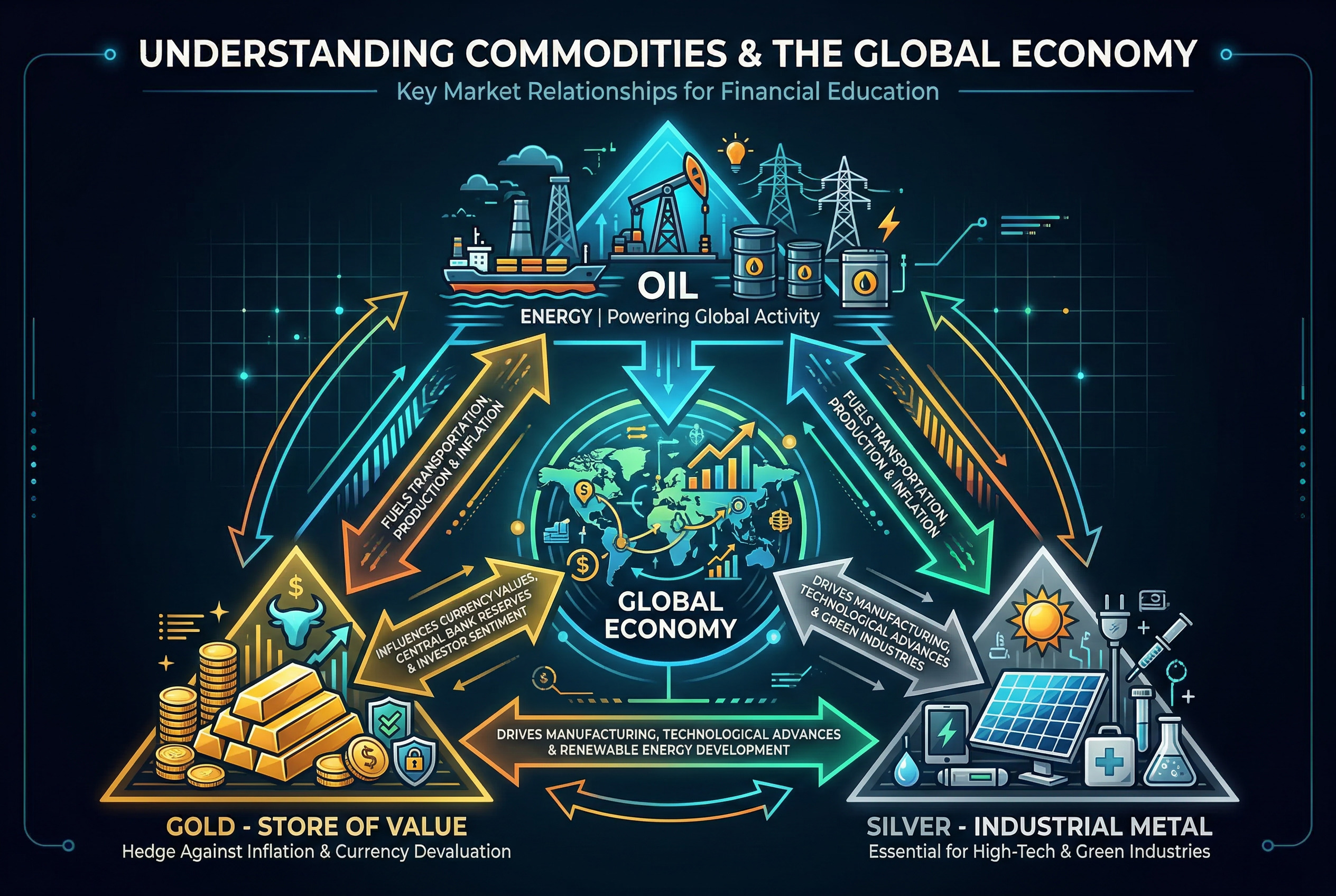
Commodities such as oil, gold, and silver play a fundamental role in the global economy. These raw materials power industries, influence inflation, and often act as early indicators of changing economic conditions. When commodity prices move, the effects ripple across financial markets, supply chains, and household budgets.
Understanding how commodities interact with economic cycles helps investors interpret global trends more clearly. From energy markets that drive transportation and manufacturing to precious metals that act as stores of value during uncertain times, commodities remain an important part of the global financial system.
In this guide, we explore the role they play in the economy, how their price cycles work, and how investors can use these cycles strategically.
Key Takeaways
- Commodities form the foundation of global economic activity.
- Oil, gold, and silver often respond to economic and geopolitical shifts.
- Commodity prices frequently influence inflation and economic growth.
- Commodity cycles create both risks and opportunities for investors.
- Understanding these cycles helps investors interpret market signals.
Table of Contents
What Are Commodities?
They are raw materials or primary agricultural products that can be bought and sold on global markets. These resources are essential inputs for manufacturing, energy production, and food supply.
They are typically divided into several categories:
- Energy such as crude oil and natural gas
- Precious metals including gold and silver
- Industrial metals such as copper and aluminium
- Agricultural including wheat, corn, and coffee
Because these resources are essential for economic activity, commodity prices often reflect changes in global supply and demand.
Why Commodities Matter in the Global Economy
Modern economies rely heavily on commodities to function.
Oil powers transportation and logistics systems. Metals are used in construction, technology, and manufacturing. Agricultural provide the food supply that supports growing populations.
When commodity prices rise or fall significantly, the effects are often felt across the broader economy.
For example:
- Rising oil prices can increase transport and manufacturing costs.
- Higher food prices can increase the cost of living.
- Rising metal prices can influence construction and infrastructure costs.
Because of these connections, commodity markets are closely monitored by governments, investors, and central banks.
Oil: The Energy Driving Economic Activity
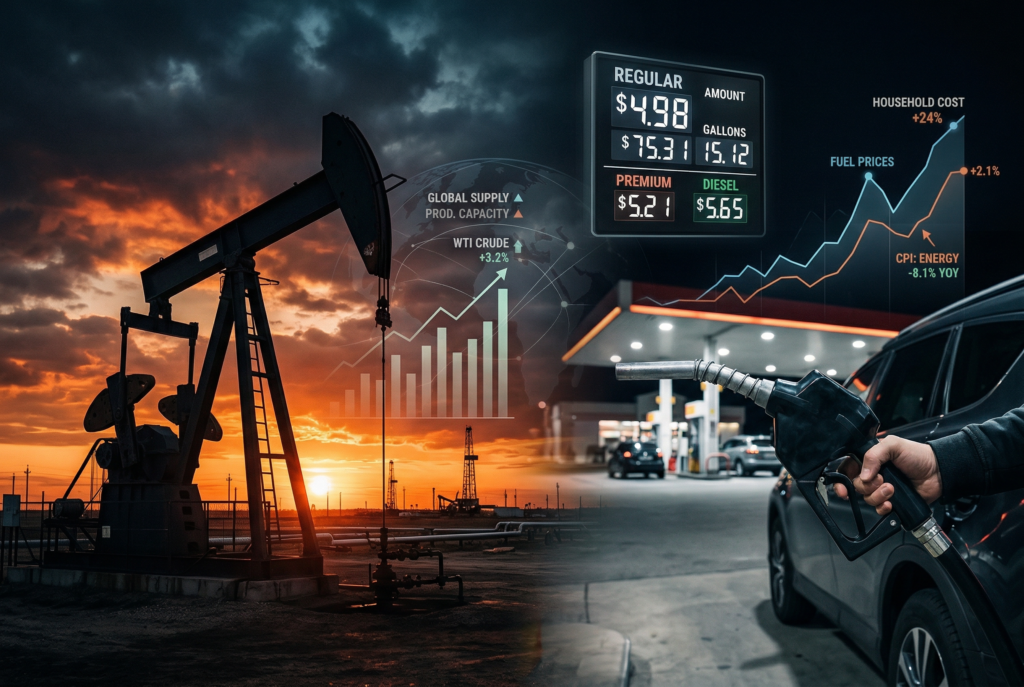
Oil remains one of the most important commodities in the global economy. It fuels transportation networks, supports manufacturing, and plays a central role in global supply chains.
Changes in oil prices can quickly influence economic conditions because energy costs are embedded in almost every industry.
When oil prices rise, the effects often include:
- higher fuel costs
- increased transport expenses
- rising production costs
- upward pressure on inflation
For a deeper explanation of how oil markets influence economic cycles, see our guide on how oil prices impact the global economy.
Gold: The Historical Store of Value
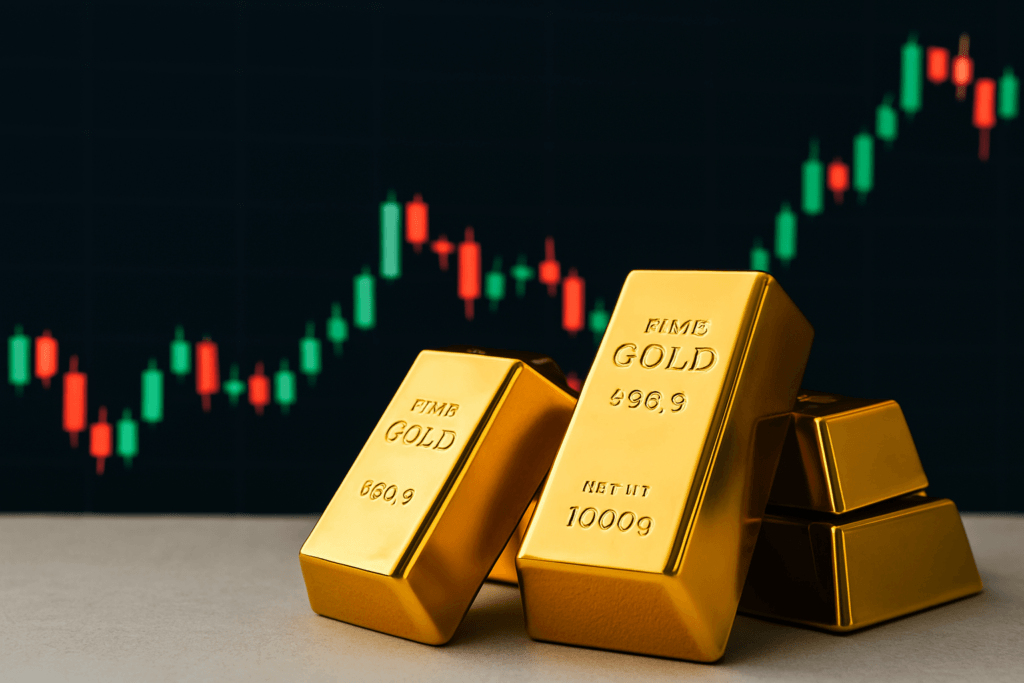
Gold has been used as a store of value for thousands of years. Unlike many other commodities, gold is valued not only for its industrial uses but also for its role as a financial asset.
During periods of economic uncertainty, investors often turn to gold as a safe haven asset. Central banks also hold gold reserves as part of their monetary systems. Gold tends to attract investor attention during periods of:
- inflation
- financial instability
- currency volatility
- geopolitical tensions
Because of this, gold often behaves differently and is driven primarily by industrial demand.
Silver: The Industrial and Investment Metal
Silver occupies a unique position among commodities because it serves both industrial and investment purposes.
Industrially, silver is widely used in electronics, solar panels, and medical technologies due to its excellent electrical conductivity and antibacterial properties.
At the same time, silver is also used as a precious metal investment similar to gold. This dual role means silver prices can respond to both economic growth and investor demand.
Commodities and Inflation
Commodity prices often play a key role in inflation. When the cost of energy, metals, or agricultural products increases, businesses typically pass these higher costs on to consumers through higher prices.
For example:
- rising oil prices increase transport and logistics costs
- higher agricultural prices increase food costs
- rising metal prices increase construction costs
These cost increases can contribute to broader inflation across the economy. Because of this relationship, economists often monitor commodity prices when assessing inflation trends.
Commodity Cycles and Economic Trends
Commodity markets tend to move in cycles driven by changes in supply, demand, and investment.
During periods of economic expansion, demand for energy and raw materials increases. This rising demand often pushes commodity prices higher.
Higher prices encourage investment in new production capacity. Over time, increased supply may lead to price stabilisation or decline.
This cycle of rising demand, increasing prices, and expanding supply has occurred repeatedly throughout economic history.
Understanding these cycles can help investors interpret market trends more effectively.
How Strategic Investors Use Commodity Cycles
Strategic investors often pay close attention to commodity cycles because they can signal broader changes in the global economy.
When commodity prices begin rising, it may indicate increasing demand and economic growth. Conversely, falling prices can sometimes signal slowing economic activity. Investors may gain exposure to through several methods, including:
- energy companies
- mining companies
- commodity-focused ETFs
- physical precious metals
Holding a diversified portfolio can help investors balance risk during periods of economic volatility.
How to Invest in Commodities
Investors can gain exposure to commodities in several different ways depending on their experience, risk tolerance, and long-term investment strategy. While commodities can play an important role in portfolio diversification, it is important to understand the different approaches available.
Commodity ETFs and Funds
One of the simplest ways to invest in commodities is through exchange-traded funds (ETFs) or commodity funds. These funds track the price of a specific commodity or a basket of commodities.
For example:
- Energy ETFs that track oil markets
- Precious metal ETFs focused on gold or silver
- Broad commodity funds that track multiple resources
ETFs allow investors to gain exposure to commodity markets without needing to store physical assets or trade futures contracts.
Commodity-Related Companies
Another common approach is investing in companies that produce or extract commodities.
Examples include:
- oil and gas companies
- mining companies
- energy infrastructure companies
- metal producers
These companies often benefit when commodity prices rise, although their performance can also be influenced by operational costs, management decisions, and broader stock market conditions.
Physical Precious Metals
Many investors choose to hold physical precious metals such as gold or silver in the form of coins or bars.
Physical metals are often viewed as a long-term store of value, particularly during periods of inflation or currency instability.
Unlike financial assets, physical metals do not depend on company performance or financial markets.
Commodity Futures and Derivatives
More experienced investors sometimes trade commodity futures contracts. These financial instruments allow traders to speculate on the future price of commodities such as oil, metals, or agricultural products.
However, futures trading can be complex and involves significant risk, so it is generally more suitable for experienced market participants.
Diversification and Long-Term Strategy
Many investors include commodities as part of a diversified investment portfolio. Because commodities often behave differently from stocks and bonds, they can help balance risk during periods of economic uncertainty or rising inflation.
Strategic investors typically focus on understanding the long-term economic cycles that influence commodity markets rather than reacting to short-term price movements.
As global economies evolve and new technologies emerge, the role of commodities continues to expand, creating both challenges and opportunities for investors.
Commodities in a Changing Global Economy
The global economy is evolving as new technologies, renewable energy systems, and artificial intelligence reshape industries. While these developments may change how resources are used, commodities will likely remain essential for many decades.
Electric vehicles require metals such as lithium and copper. Renewable energy infrastructure depends on industrial metals. Global trade and transportation systems still rely heavily on energy resources.
Rather than disappearing, commodities are likely to remain a foundational component of the global economy as it continues to evolve.
Further Reading
Frequently Asked Questions
What are commodities?
They are raw materials such as oil, metals, and agricultural products that are traded on global markets.
Why are commodities important to the economy?
They provide the raw materials needed for energy production, manufacturing, and food supply.
Why do commodity prices fluctuate?
Prices change due to shifts in supply, demand, geopolitical events, and economic growth.
Are commodities good investments?
Commodities can provide diversification within an investment portfolio, particularly during periods of inflation or economic uncertainty.
What commodities do investors focus on most?
Many investors focus on major commodities such as oil, gold, silver, copper, and agricultural products.
Learn More
Understanding how commodities influence the global economy can help investors interpret market trends and make better long-term decisions.
If you want to learn more about economic cycles, investing strategies, and building multiple income streams, explore the Zero to Millionaire Wealth Strategy and discover how strategic investors navigate changing market conditions.
Economic Commentary
While this guide explains the long-term role commodities play in the global economy, real-world markets are constantly evolving. Our Economic Commentary provides regular insights into how current events and economic developments are influencing commodity prices and investment trends.
Karen Newton Ecosystem


Glossary
A definition of words and phrases used in this post are available in the glossary

Karen Newton is a Business and Wealth Strategist, 3x International Bestselling Author, and founder of Karen Newton International. She combines practical experience with AI-Powered Entrepreneurship to help smart entrepreneurs build online income, invest strategically, and create long-term wealth through business growth, investments and joint ventures.