How the Space Economy Is Creating the Next Global Investment Shift
For decades, space exploration was driven by governments, national pride, and Cold War competition. Today, a new Space Race is emerging but this time it is being powered by technology, private investment, AI, defence, communications, and global infrastructure.
What was once science fiction is rapidly becoming part of the real economy.
Countries including the United States, China, India, and members of the European Union are investing heavily into space technology, satellite systems, lunar exploration, AI-powered robotics, and next-generation communications. At the same time, private companies are transforming space into a commercial industry with enormous long-term potential.
This is no longer just about reaching the moon.
It is about controlling future technology, communications, energy systems, global security, and economic influence.
For investors and entrepreneurs, the rise of the Space Economy may become one of the defining growth trends of the next decade.
Key Takeaways
- The global Space Economy is expanding rapidly through both government and private investment.
- The United States, China, and India are all accelerating space development programs.
- Space technology now impacts communications, AI, defence, logistics, weather systems, and global internet access.
- The sector creates opportunities across multiple industries, not just aerospace.
- Investors are increasingly watching satellite technology, robotics, rare earth metals, AI systems, and infrastructure connected to the Space Economy.
- The modern Space Race is as much about economic power as scientific discovery.
Table of Contents
Why the Space Race Is Returning
The original Space Race was largely political. A challenge issued by President JF Kennedy in the early 1960s to put a man on the moon.
The new Space Race is economic. Governments now recognise that space technology influences all aspects of our daily lives – communications, defence, weather forecasting, global trade and internet infrastructure.
At the same time, private companies are reducing launch costs and accelerating innovation through a combination of AI, robotics, satellite systems and private investment. This has transformed space from a government-only industry into a rapidly expanding commercial market.
The Shift from Government Projects to Commercial Space
One of the biggest changes in the modern Space Race is the rise of private companies. Businesses are now playing a major role in satellite deployment, global internet systems, AI-assited navigation and defence partnership.
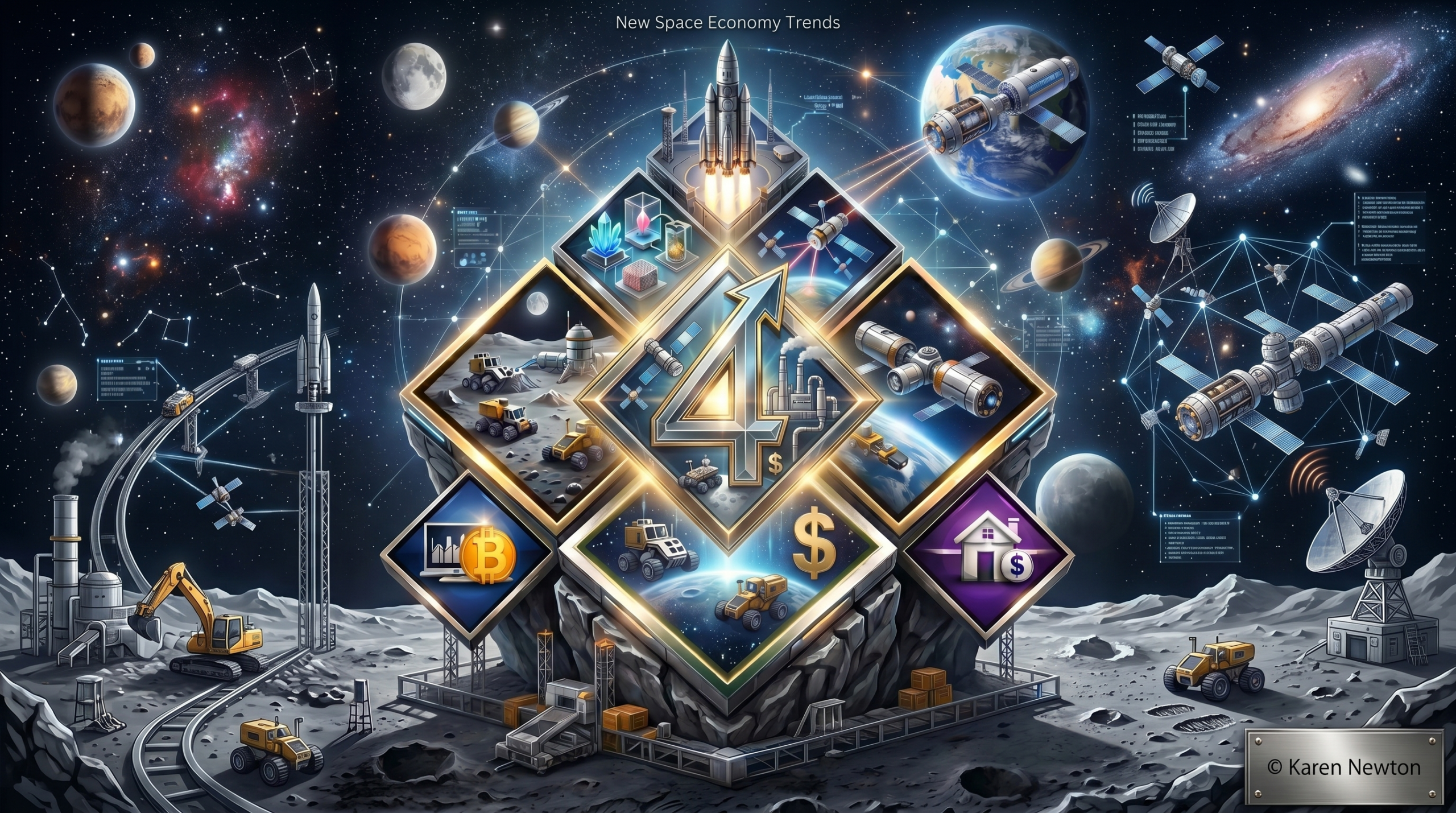
This shift has created what many analysts now call the “Space Economy.” Rather than being limited to astronauts and moon landings, the Space Economy now includes:
- telecommunications
- AI systems
- semiconductors
- advanced manufacturing
- data systems
- cybersecurity
- materials engineering
- renewable energy technologies
Space is becoming part of the wider global technology ecosystem.
Countries Leading the New Space Economy
United States
The United States remains one of the dominant forces in space development. Programs such as Artemis II are designed to return humans to the moon while also building the foundation for long-term lunar exploration.
The US also leads in private space innovation, satellite technology, defence systems, and AI integration.
China
China has rapidly expanded its space capabilities over the past decade. Its long-term strategy includes:
- lunar exploration
- satellite expansion
- independent space station development
- communications infrastructure
- strategic technology investment
China increasingly views space as part of its long-term economic and geopolitical influence. Its growth in technology manufacturing, AI systems, and infrastructure development supports this broader strategy.
India
India has become an increasingly important player in the global space industry. Its lower-cost engineering approach has attracted international attention, particularly after successful lunar missions and satellite programs.
India’s rise demonstrates that the new Space Economy is not limited to traditional superpowers.
Europe and Other Nations
Europe, Japan, and other nations are also increasing investment into:
- satellite systems
- communications
- environmental monitoring
- defence partnerships
- scientific research
This creates a highly competitive global environment where space technology is becoming strategically important for both economic growth and national security.
Why Investors Are Paying Attention
The Space Economy is attracting attention because it connects to multiple long-term growth sectors simultaneously. This includes the growth in AI, robotics and cybersecurity. Defence reliance on communications and semiconductor technology. Global resources that include renewable energy and advanced manufacturing.
Rather than investing only in “space companies,” many investors are looking at the wider ecosystem supporting the industry. This creates opportunities the fields such as technology, engineering, commoditions, software and automation. The long-term potential is what makes the sector attractive.
Industries Benefiting from the Space Economy
Many companies operate with the new structure offering investment opportunities. The growth areas are:
Satellite Communications
Satellite systems are becoming increasingly important for:
- internet access
- emergency systems
- shipping
- logistics
- agriculture
- military operations
Global communication networks may become one of the most valuable parts of the Space Economy.
Artificial Intelligence
AI is critical for:
- autonomous systems
- navigation
- satellite data analysis
- robotics
- predictive maintenance
- defence technologies
The growth of AI and space technology are becoming closely connected.
Robotics and Automation
Future space missions will rely heavily on robotics.
This includes:
- remote operations
- lunar construction
- mining technologies
- maintenance systems
- exploration vehicles
The development of these technologies may also create spin-off innovations for industries on Earth.
Defence and Security
Space increasingly overlaps with national defence strategies.
Governments are investing heavily into:
- surveillance systems
- cybersecurity
- communications protection
- navigation systems
- satellite resilience
This is one reason why investment into space infrastructure continues to accelerate globally.
Commodities and the Space Supply Chain
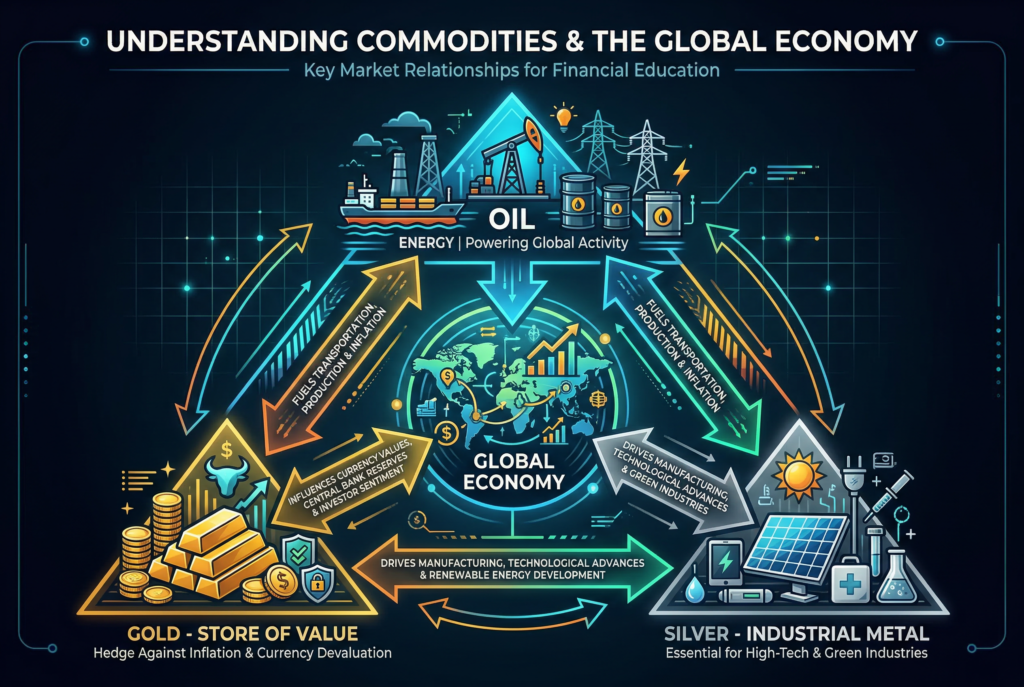
Many people overlook the importance of commodities in the Space Economy. Advanced technology systems require copper, silver, lithium, rare earth elements, semiconductors and energy infrastructure.
As demand for technology expands, the pressure on supply chains may also increase.
This is one reason why commodities remain strategically important within long-term wealth strategies.
Risks and Challenges
Like all emerging sectors, the Space Economy also carries risks. These include:
- high development costs
- geopolitical tensions
- regulation
- technological failures
- speculative investment bubbles
- defence-related uncertainty
Investors should approach the sector carefully and focus on long-term trends rather than hype alone.
What This Means for Entrepreneurs and Investors
The rise of the Space Economy highlights a larger trend where the world is entering another major technological transition. Historically, periods of technological transformation have created:
- new industries
- new wealth opportunities
- shifts in global power
- changing investment cycles
Entrepreneurs who understand future trends early often position themselves more effectively for long-term change.
The key is not necessarily predicting individual winners, but recognising the direction global investment and infrastructure are moving.
Further Reading

Frequently Asked Questions
What is the Space Economy?
The Space Economy refers to the commercial and economic activity connected to space technology, including satellites, communications, AI systems, defence, robotics, infrastructure, and exploration.
Why is the Space Race returning?
Governments and private companies now see space as strategically important for technology, communications, security, and long-term economic growth.
Which countries are leading the new Space Race?
The United States, China, and India are currently among the major countries investing heavily into space development.
Is the Space Economy only about rockets?
No. The Space Economy includes AI, satellite systems, communications, cybersecurity, robotics, manufacturing, commodities, and infrastructure.
How does AI connect to the Space Economy?
AI is increasingly used in navigation systems, robotics, satellite data analysis, autonomous systems, and defence technologies connected to space infrastructure.
What commodities are important for the Space Economy?
Copper, silver, lithium, rare earth elements, semiconductors, and energy-related materials all play important roles in supporting advanced technologies.
Is investing in the Space Economy risky?
Yes. Like all emerging sectors, it can be volatile and speculative. Long-term trends should be studied carefully before making investment decisions.
How does the Space Economy affect everyday life?
Space technology already impacts internet systems, GPS navigation, weather forecasting, communications, shipping, and many digital services used daily.
For more economic updates follow – Business and Wealth Strategy – Deciphering the Economy
Karen Newton Ecosystem

Disclaimer
I am not a licensed financial advisor, and the strategies discussed are based on personal experience and general market knowledge. Always do your own research and consider your individual financial goals, risk tolerance, and personal circumstances before making any investment decisions.
We strongly recommend that you consult with a qualified financial advisor or licensed professional before acting on any information discussed in this article. Investing involves risk, and past performance is not indicative of future results.
By reading this article, you agree that the author and associated entities are not responsible for any losses or damages arising from your use of this content.

Karen Newton is a Business and Wealth Strategist, 3x #1 International Bestselling Author, Speaker and founder of Karen Newton International. She is known for helping entrepreneurs and investors connect business growth, investment opportunities, and economic trends into practical strategies for building long-term wealth and financial resilience.